New York Times Playlist

Experience Design

Role: Interaction Designer, Video Editor + Voice

PROJECT OVERVIEW

New York Times Playlists was a 6-week project. The goal was to identify an opportunity for a design intervention within New York Times, with a focus on design principles, research and clear direction. The final deliverable provided both the user and the business value, and the New York Times have since implemented a similar feature.

SOLUTION

New York Times Playlists allow for occasional readers of the Times to consume news in an audio-based intervention. This solution helps occasional readers consume news at times that fit their busy schedules in order to retain existing subscribers who do not make the time to read.

CONTEXT

In recent years, the NY Times has focused primarily on its digital subscription growth, with a goal of hitting 15 million subscribers by 2027. Although they have found success in maintaining their subscription growth, the increase in subscribers was mainly sourced from discounted promotional offerings for their subscriptions.

From further research and surveys, the NY Times proved to be the most cancelled digital news subscription. One of the leading factors causing people to cancel subscriptions was a reader's perceived lack of time for reading, causing readers to not recognize the value in renewing their subscriptions once the promotional offer returns to the regular rate. 

Page from The New York Times showing statistics about digital subscriptions, including a graph of subscriber growth from 2018 to 2022 and headlines about subscription milestones reached by The Times in 2022.
A newspaper page with the headline "Most Cancelled" about the decline in digital subscription growth, featuring a line graph showing percentage change from 2020 to 2023, and text discussing subscription cancellation reasons and media company's growth strategy.

From a survey conducted by Nieman Lab (503 respondents), the team was able to uncover insight on why subscribers were unsubscribing from the NY Times - Respondents were cancelling because of information overload as they were not making enough time to read news.
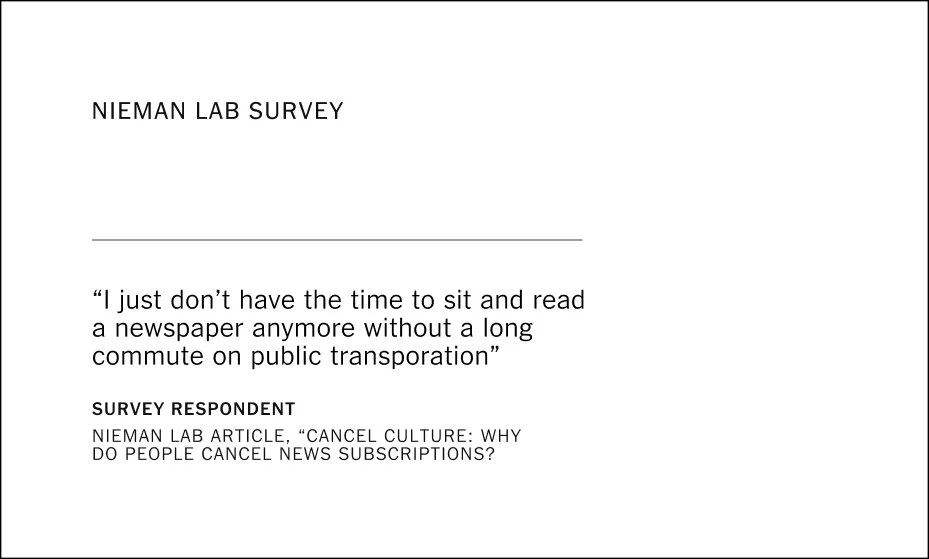
Text-based survey excerpt with quote about not having time to read newspapers due to long public transportation commutes, from Nieman Lab Survey.

FRAMING THE PROBLEM SPACE

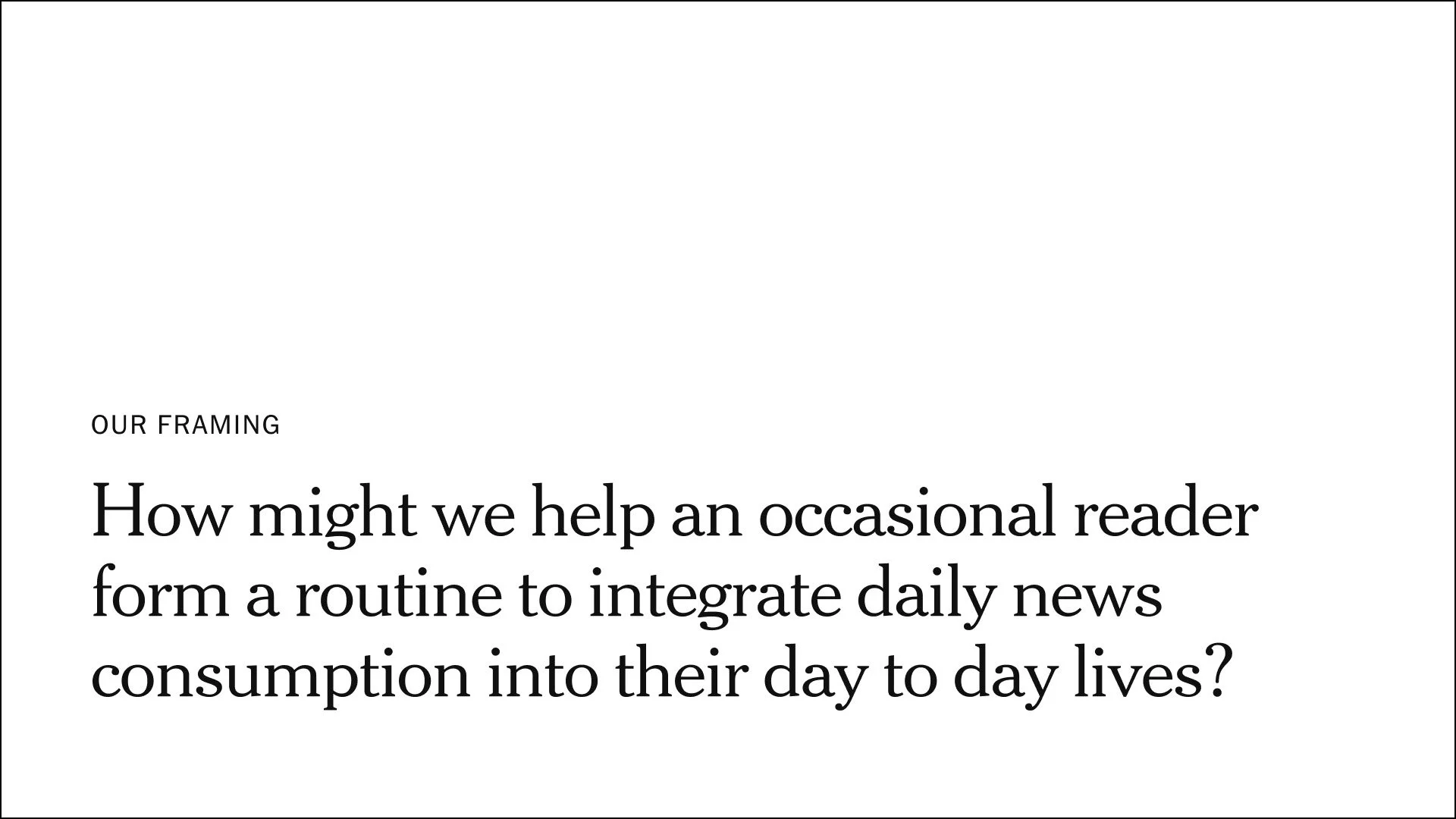
Following our secondary research, insights and interviews, the team developed the scope and focus for our project:
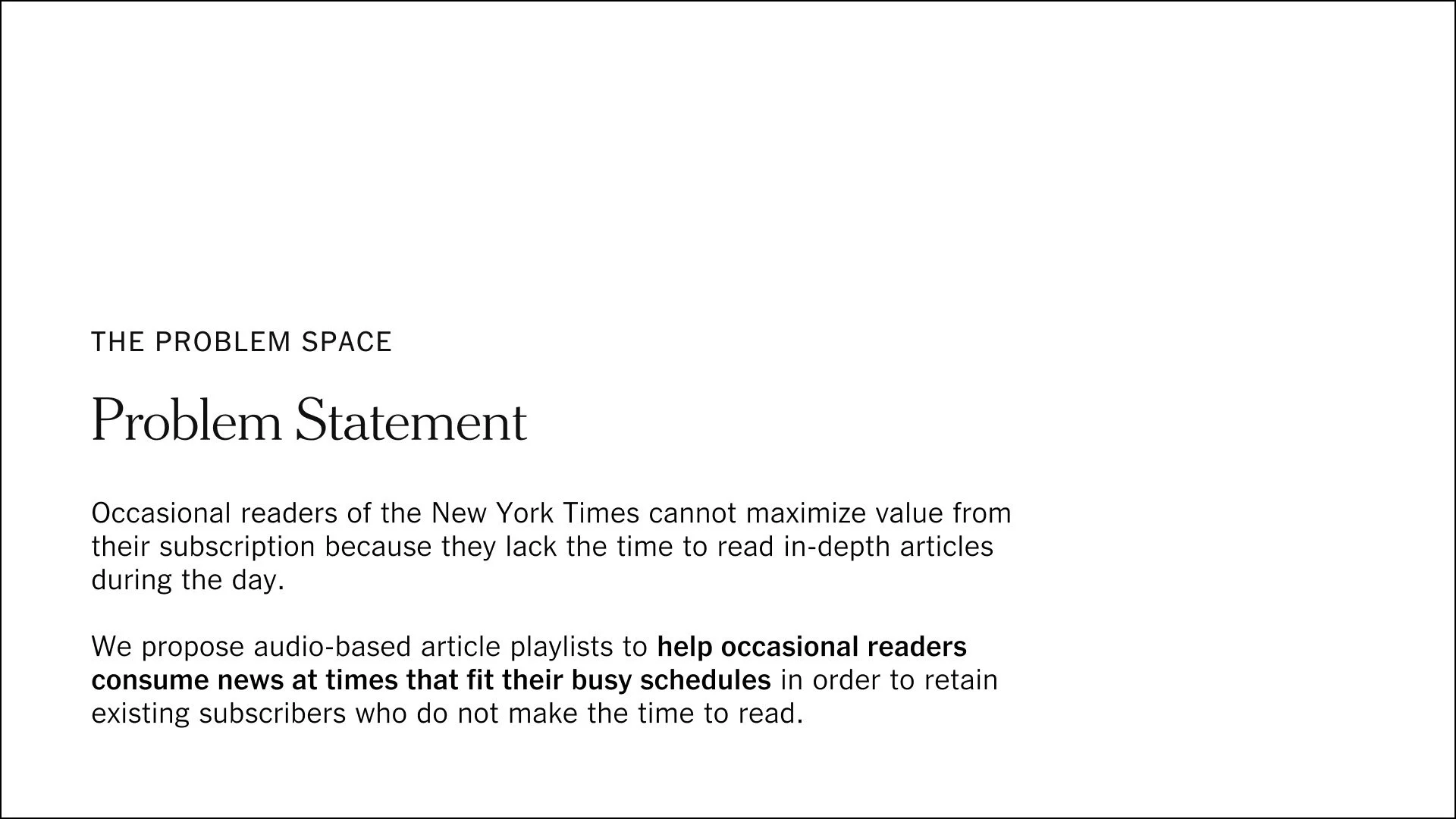
A page from a publication titled 'The Problem Space.' The page discusses problem statements related to occasional readers of the New York Times who lack time to read in-depth articles during the day. It mentions proposing audio-based article playlists to help readers consume news efficiently according to their busy schedules.
Text-based document outlining how to help an occasional reader form a routine to integrate daily news consumption into their day-to-day lives.
Diagram showing the journey of an occasional reader through different stages of news consumption, including social media browsing, searching for articles, reading headlines, and unsubscribing from the platform.
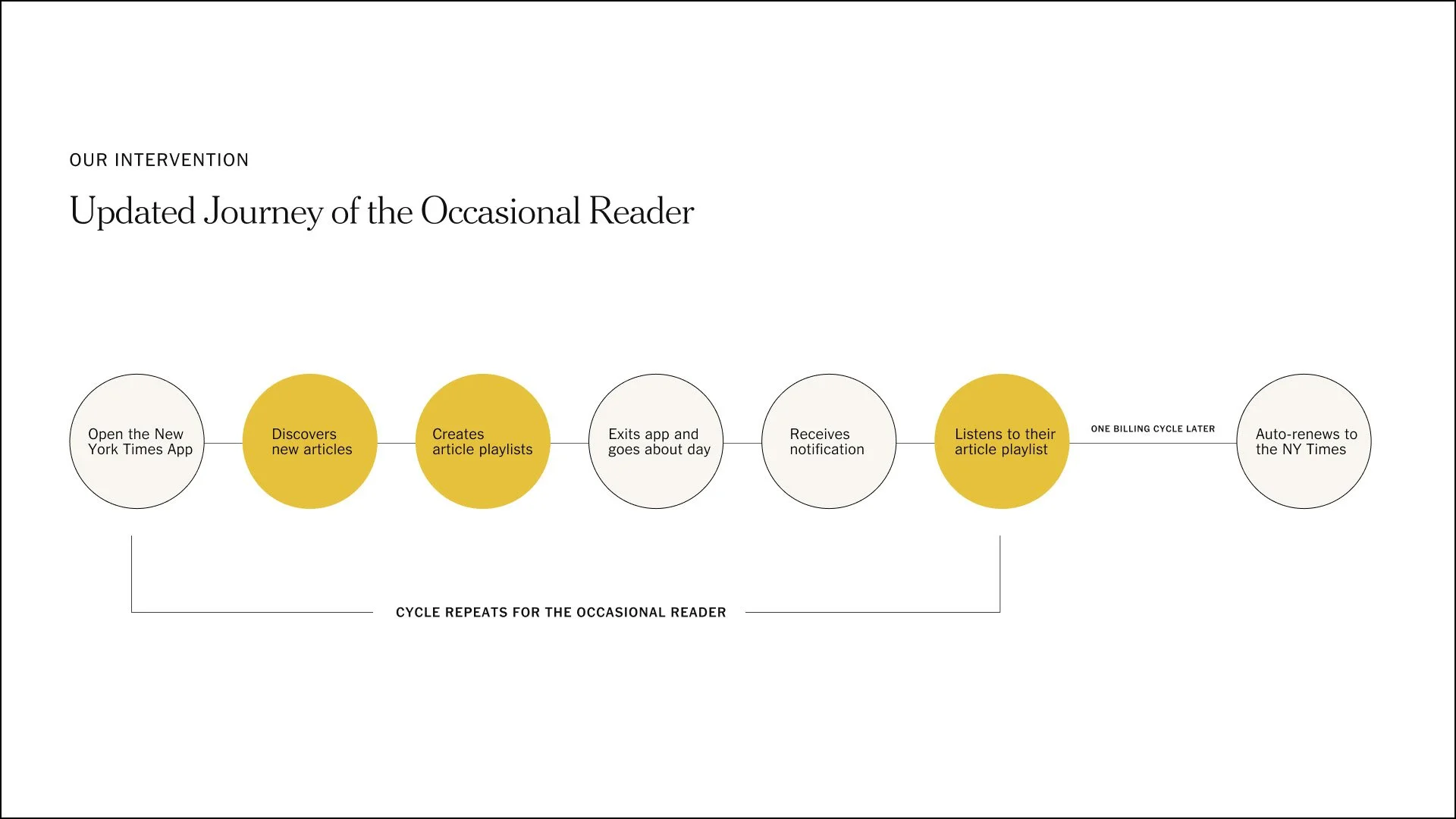
Flowchart depicting the updated journey of an occasional reader with steps including opening the New York Times app, discovering new articles, creating playlists, receiving notifications, listening to their playlist, and auto-renewing subscription.

THE SOLUTION: NEW YORK TIMES PLAYLISTS
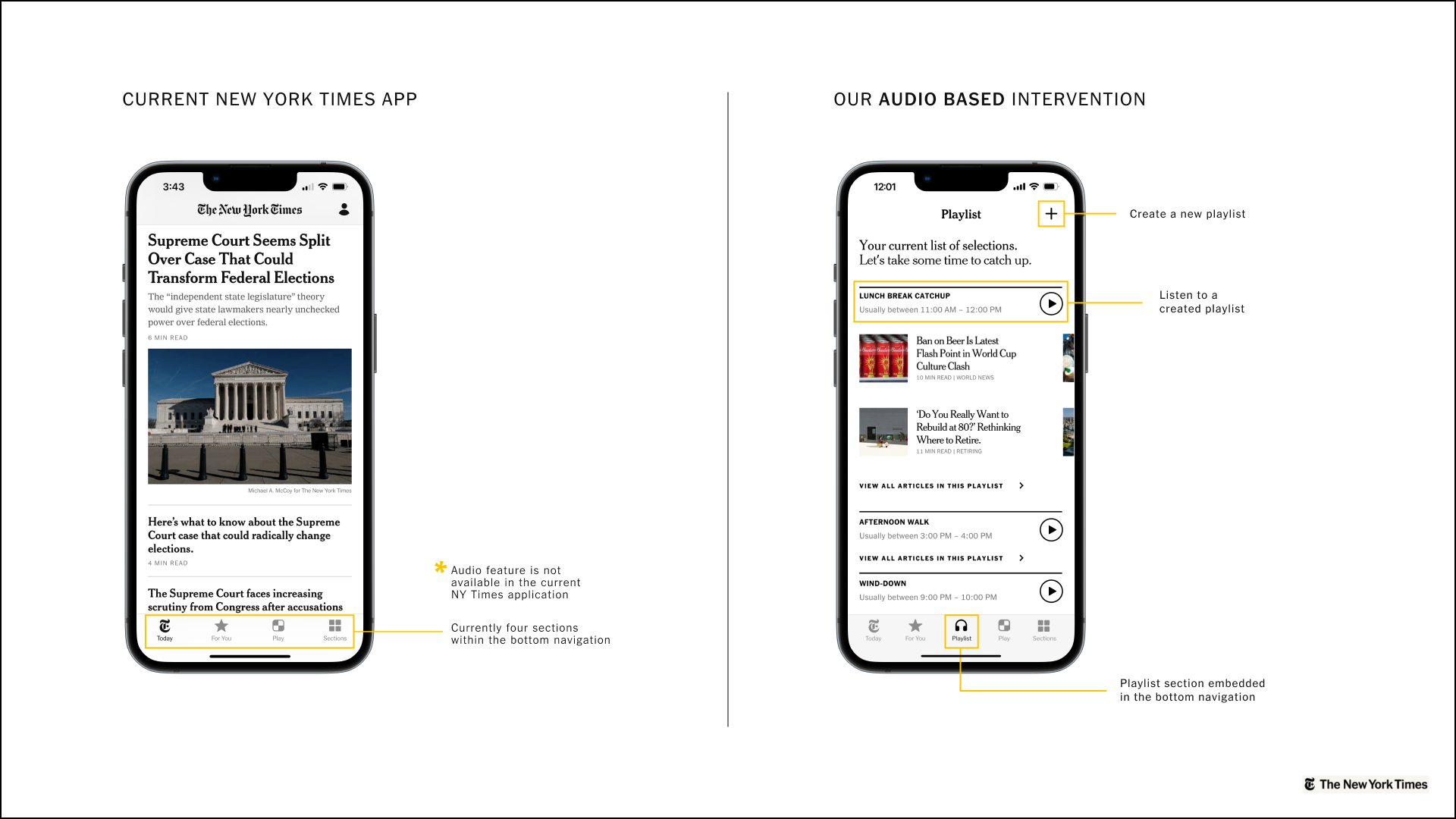
Comparison of the New York Times app showing a news article about the Supreme Court and an audio intervention playlist with options to create and listen to playlists, showing bottom navigation sections with icons for Today, For You, Play, and Sections.

KEY FEATURES

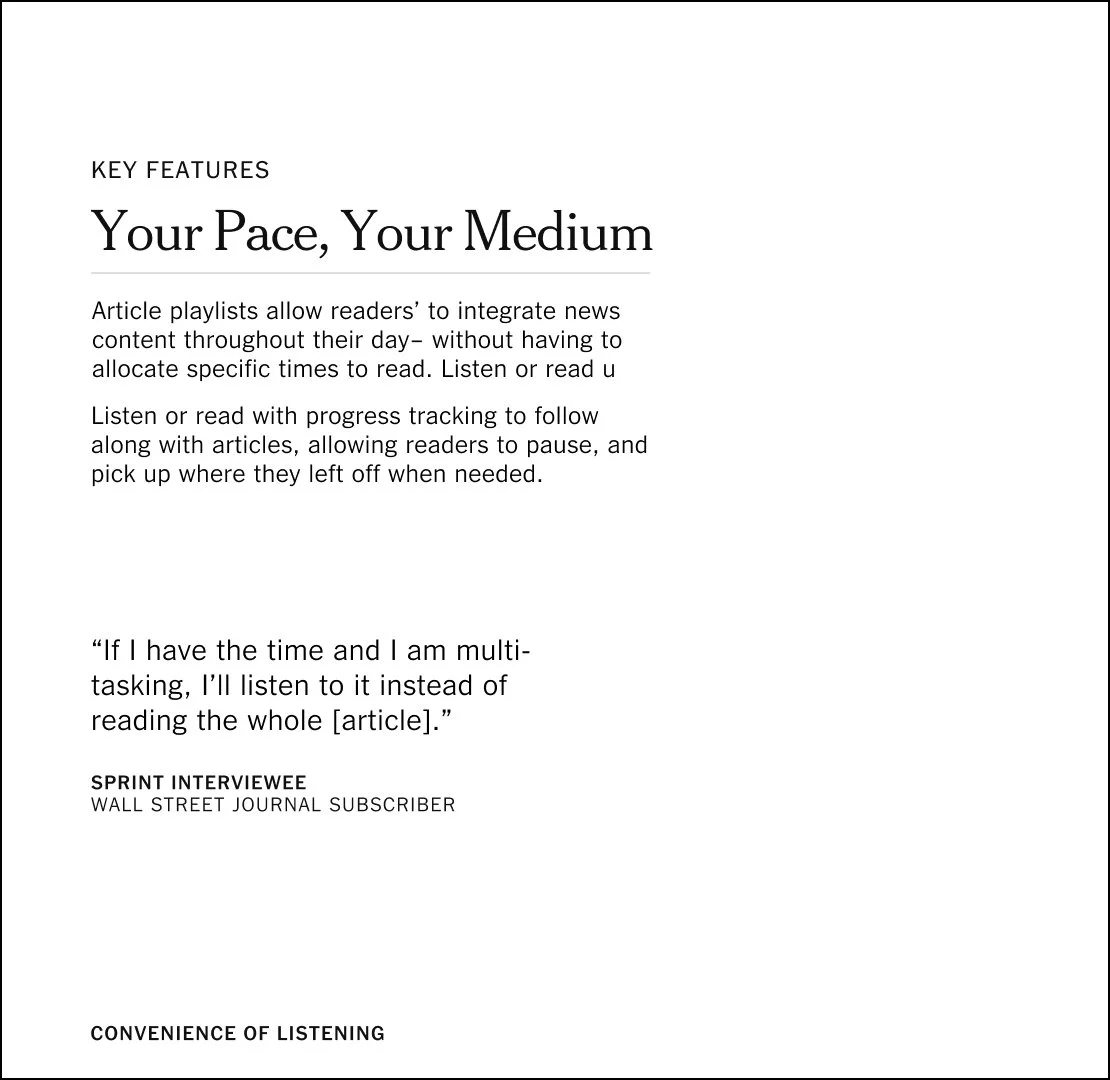
Page from a publication or report with the title 'Your Pace, Your Medium,' discussing article playlists and listening or reading with progress tracking. Contains a quote from an interviewee and sections titled 'Key Features' and 'Convenience of Listening'.
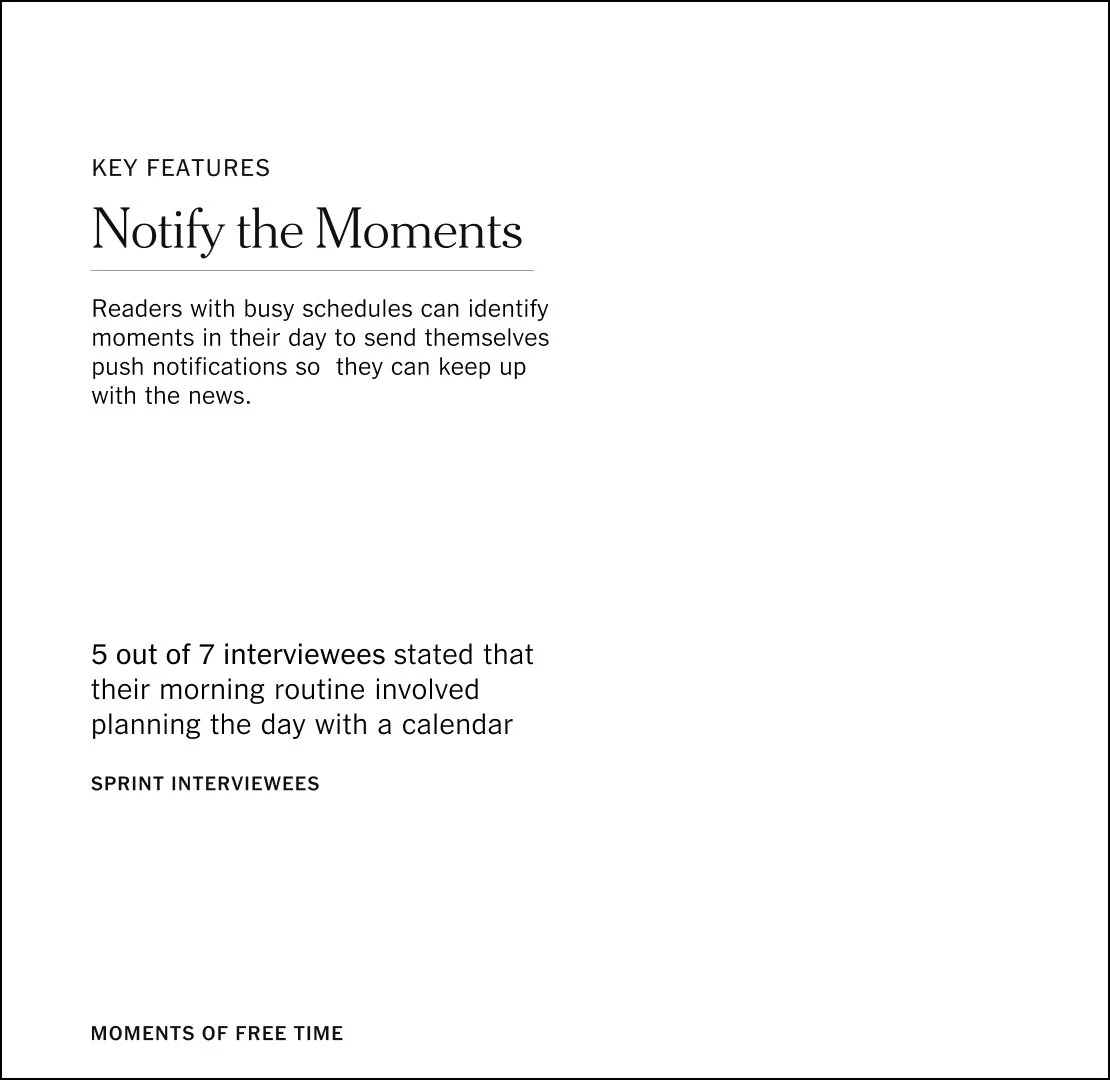
Text slide with the heading 'Notify the Moments' and bullet points about scheduling notifications and planning with a calendar.
White page with black text discussing news content consumption habits and research by Columbia University and the French National Institute.

VALUE FROM INTERVENTION

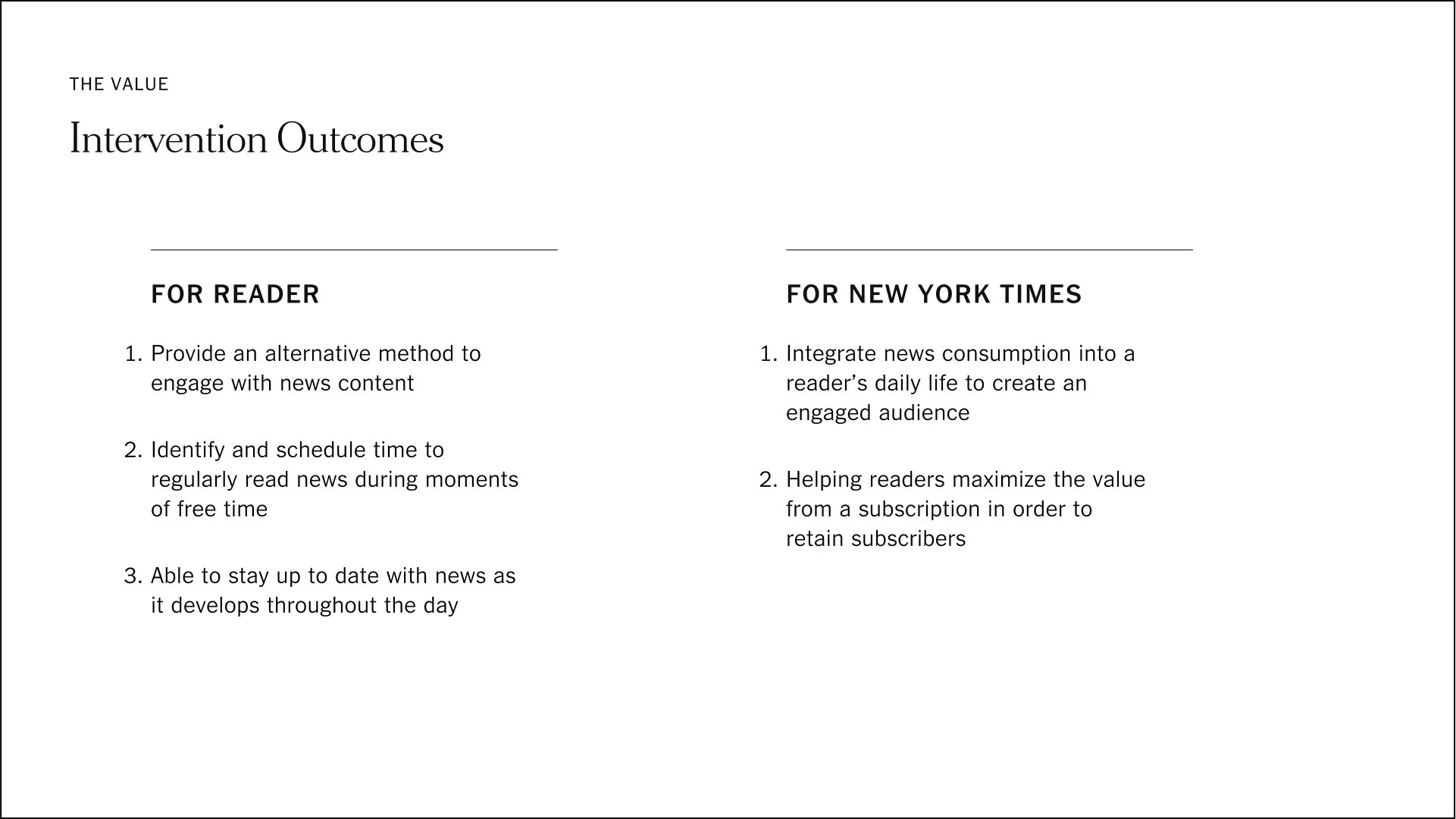
A document titled "Intervention Outcomes" with two columns of points. The left column is for the reader, listing methods to engage with news content, while the right column is for New York Times staff, focusing on integrating news consumption and maximizing subscription value.